English
 Español
Steam Styling Guide
The Steam Straightener Video Doesn’t Tell You Everything
Every viral steam hair straightener video shows the same satisfying glide — and leaves out the preparation, timing, and technique that make it work. Here is the unedited version.
The steam straightener looks simple: fill a tank, wait for the heat, pull the plates through the hair. But watch any tutorial closely, and the technique is usually cut or sped up. The details that decide between smooth and damaged hair are exactly what disappears in the edit.
If your early attempts did not match the footage, the tool is rarely the problem. Steam straightening softens the cuticle with moisture, so less heat and less pressure are needed. That works when the water, the temperature, and the glide speed all work together.
What a Steam Hair Straightener Actually Does
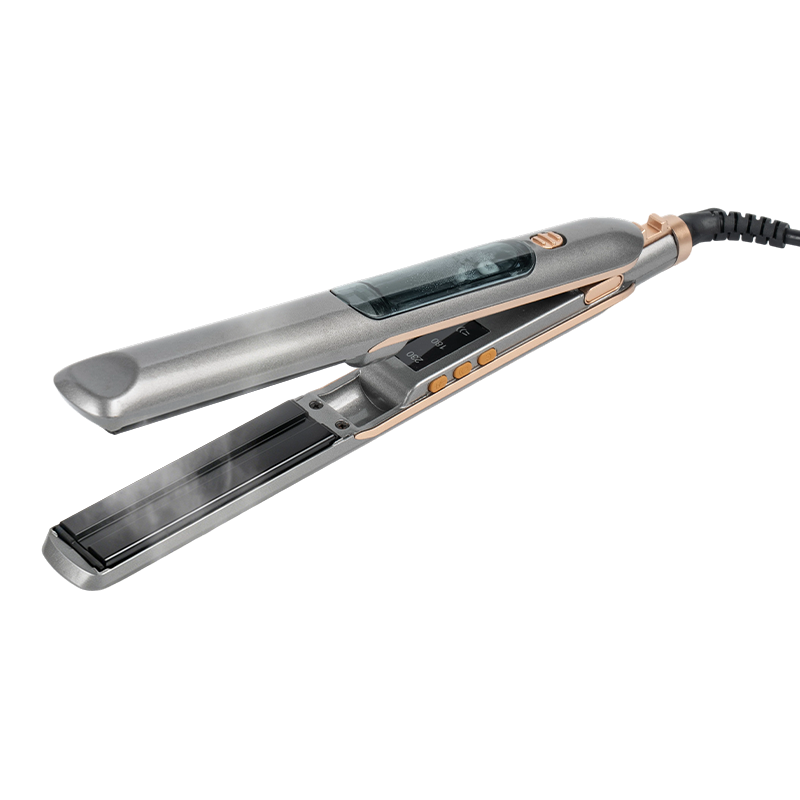
A steam hair straightener is a flat iron with an integrated water chamber that turns a thin layer of water into micro-steam. The steam escapes through vents along the plates, briefly softening the cuticle as heat arrives, so the strand can lie flat at a lower temperature than a regular iron requires.
That changes the routine. With a conventional straightener, technique is mostly pressure and speed. With a steam model, everything depends on managing water: what you pour in, how it releases during each pass, and how fast you move so it can work without re-saturating the hair.
Steam systems differ in how evenly they distribute moisture. Designs like the nanoscale steam balance straightener release vapour across a floating plate, keeping wetting consistent from root to tip. In a product video, look for that consistency rather than a dramatic cloud; an impressive plume is often just surface vapour.
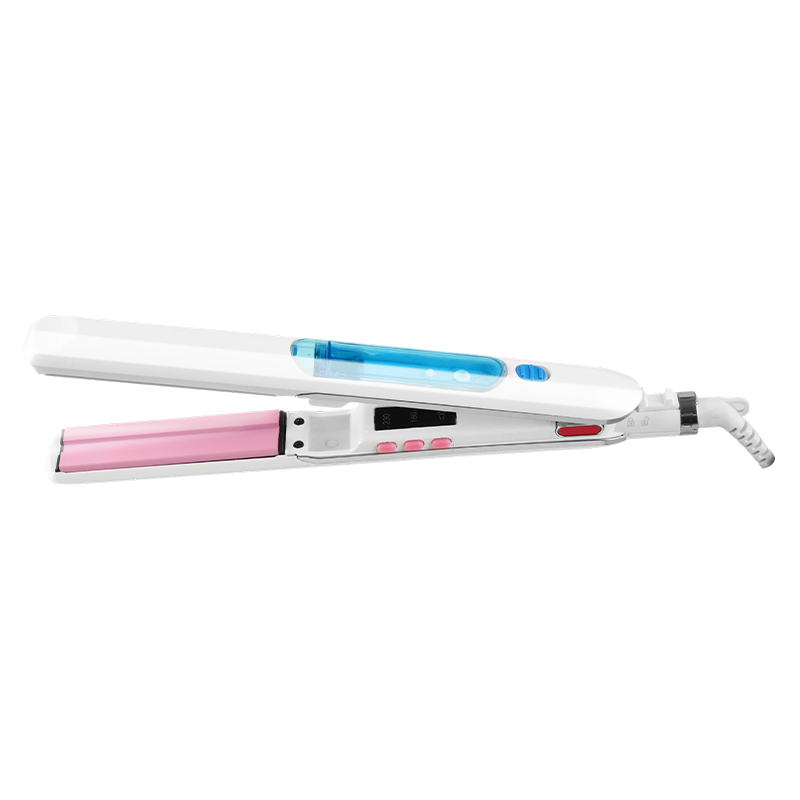 MXN-302 Nanoscale Steam Balance Hair Straightener with Floating PlatesThis straightener uses nano-water ion and spray steam technology to reduce dryness and frizz, with 180°C and 230°C settings and PTC heating. It suits those seeking even steam distribution and moisture retention during styling.View Product →
Before You Switch It On: Prep in the Right Order
Preparation decides most of the result. Start with hair that is clean, fully dry, and free of tangles. Steam straightening is not a wet-to-dry method; if the hair is damp, the extra moisture causes popping, white spots, and frizz that lasts all day.
Apply heat protectant and comb it through evenly. The plates still get hot, even with steam, and a protectant is the last line of defence. Then divide the hair into two-to-three-centimetre sections. Videos usually skip this, but sectioning keeps the steam focused and prevents repeated passes over the same strand.
Fill the reservoir to the marked line with distilled or demineralised water; tap water leaves minerals that slowly block the steam vents. If your hair is very dry, a steam conditioning step before straightening adds hydration where it matters most.
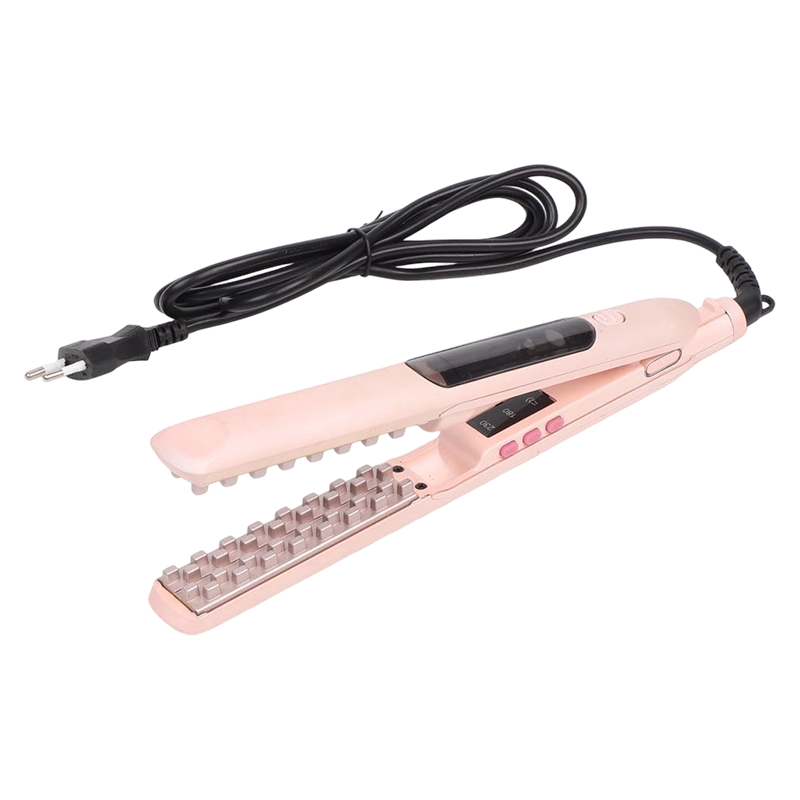 MXN-303 Steam Atomizing Water Ion Hair Conditioner BrushA professional spray steam brush that hydrates hair with atomized ions, featuring floating plates and two temperature settings. Ideal for dry or static-prone hair, this tool helps add moisture while smoothing and reducing heat stress.View Product →
Warning
Never add oils, perfumes, or styling products to the water tank. The steam chamber is for water only; additives can damage the heating element and cause uneven spray.
How to Use a Steam Hair Straightener, Step by Step
The routine takes about ten minutes for shoulder-length hair, including warm-up. The sequence below fills in the timing that most videos skip.
- Fill the tank with distilled water to the marked level and close the seal. Tilt the iron gently to check for drips.
- Set the temperature for your hair profile (see the table below). If the tool has a digital display, use it; precision matters more with steam.
- Wait for the ready signal, then wait a few extra seconds until steam appears evenly along the vent line. The first puff is not the signal to start.
- Take one section at a time, about two to three centimetres wide, and comb it flat. Keep the rest clipped away.
- Glide from root to tip in one steady pass, taking three to five seconds. Do not clamp hard; steam and temperature do the work.
- Let the section cool for a moment. Steam leaves the cuticle flexible, and the style locks in only after you release the plates.
- Move upward layer by layer, leaving the top section for last.
Info
If you are unsure about temperature, start low and test one strand near the hairline. The cooled result tells you more than any chart.
Temperature and Glide Time by Hair Type
These are starting points, not absolute rules. Because steam compensates for heat, you will often finish at the lower end of the range.
| Hair type | Temperature | Glide time | Practical note |
|---|---|---|---|
| Fine or fragile hair | 150–170 °C / 300–340 °F | 2–3 seconds per pass | One pass is usually enough; do not repeat the same section. |
| Normal, uncoloured hair | 170–190 °C / 340–375 °F | 3–4 seconds per pass | Keep the glide even; speed matters more than pressure. |
| Thick or coarse hair | 185–210 °C / 365–410 °F | 4–5 seconds per pass | Use small sections first, then check smoothness after one pass. |
| Curly or very textured hair | 160–185 °C / 320–365 °F | 3–4 seconds per pass | Steam helps most here; let moisture open the cuticle before the heat sets it flat. |
If a straightener does not let you control the temperature, treat that as a warning sign: unregulated heat is the most common cause of damage in any styling iron. Before you buy, our guide on how to tell if a hair straightener is safe walks through the essential points.
What a Video Usually Does Not Show You
The most useful steam straightener videos share a few features: they start with a filled tank, wait for the ready signal, show the section size beside the plate, and record the glide in real time. If a video is mostly fast cuts and music, treat it as inspiration rather than instruction.
Watch for four details: hand position (keep the wrist straight and the plates parallel to the head); speed (many clips are sped up, so judge by the visible seconds); sound (a quiet hiss is normal, but loud popping means the temperature or water level is wrong); and sectioning (if the strand looks wider than the plate, another section is hidden in the shot).
A steam straightener rewards patience. The gloss you see in the finished section is not a filter; it is the cuticle lying flat because moisture, heat, and speed arrived together.
After the session, do not brush the style immediately; the cuticle needs a moment to settle. On later days, a steam styling comb can refresh flyaways without repeating a full straightening pass.
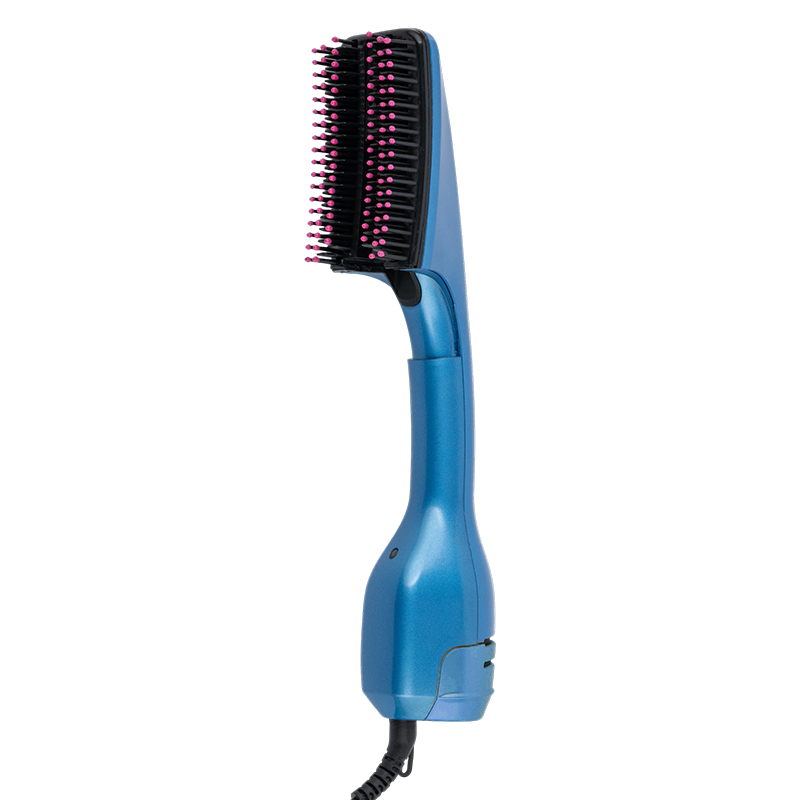 MXN-688 Steam Aqua Atomized Styling CombA 750W steam styling comb that releases fine water molecules while drying, with two heat settings and a 360° rotating cord. Perfect for reviving frizz and static between sessions, keeping hair moisturized and shiny without a full straightening pass.View Product →
Common Mistakes That Undo the Result
Most failed sessions come down to a few repeatable errors.
- Straightening hair that is still damp. Steam plus liquid water creates popping, spotting, and delayed frizz.
- Pressing the plates together hard. This pushes water into the strand instead of smoothing the surface.
- Gliding too slowly. Heat and trapped moisture in one spot damage the hair protein.
- Passing the same section repeatedly. Two passes are enough for most hair types.
- Using tap water. Limescale builds up in the chamber and blocks the vents over time.
- Skipping heat protection. Steam lowers the temperature needed, but the iron is still hot.
Danger
If the plate spits or pops loudly, stop. Lower the temperature by about ten degrees and check the tank seal. A leaking steam chamber is not something to ignore.
Cleaning and Aftercare: The Part Nobody Films
Wait until the iron is completely cool, then wipe the plates with a dry, soft cloth. Avoid abrasive pads and sharp tools near the vents, which are narrow and easily damaged. Empty the reservoir after every session; standing water leaves residue that later shows up as uneven steam.
Once a month, check the vent line for dust and scale. If steam output drops despite normal use, the cause is usually mineral build-up, not a broken heating system. Distilled water prevents most of this.
Success
A straightener that steams consistently after months of use is almost always one that was emptied, wiped, and stored dry after every session.
The Bottom Line
Steam straightening is not complicated, but it is precise. A video shows the gesture; the skill is in the water choice, the temperature, the glide speed, and the pause that follows. Once those elements are consistent, a steam straightener becomes a genuinely lower-damage alternative to a regular flat iron.
Watch the demonstration, then rebuild it with your own technique: dry hair, distilled water, a moderate temperature, small sections, one even pass, and a patient pause. That sequence is the entire method.